Do Misting Fans Work in Humid Weather? What to Expect
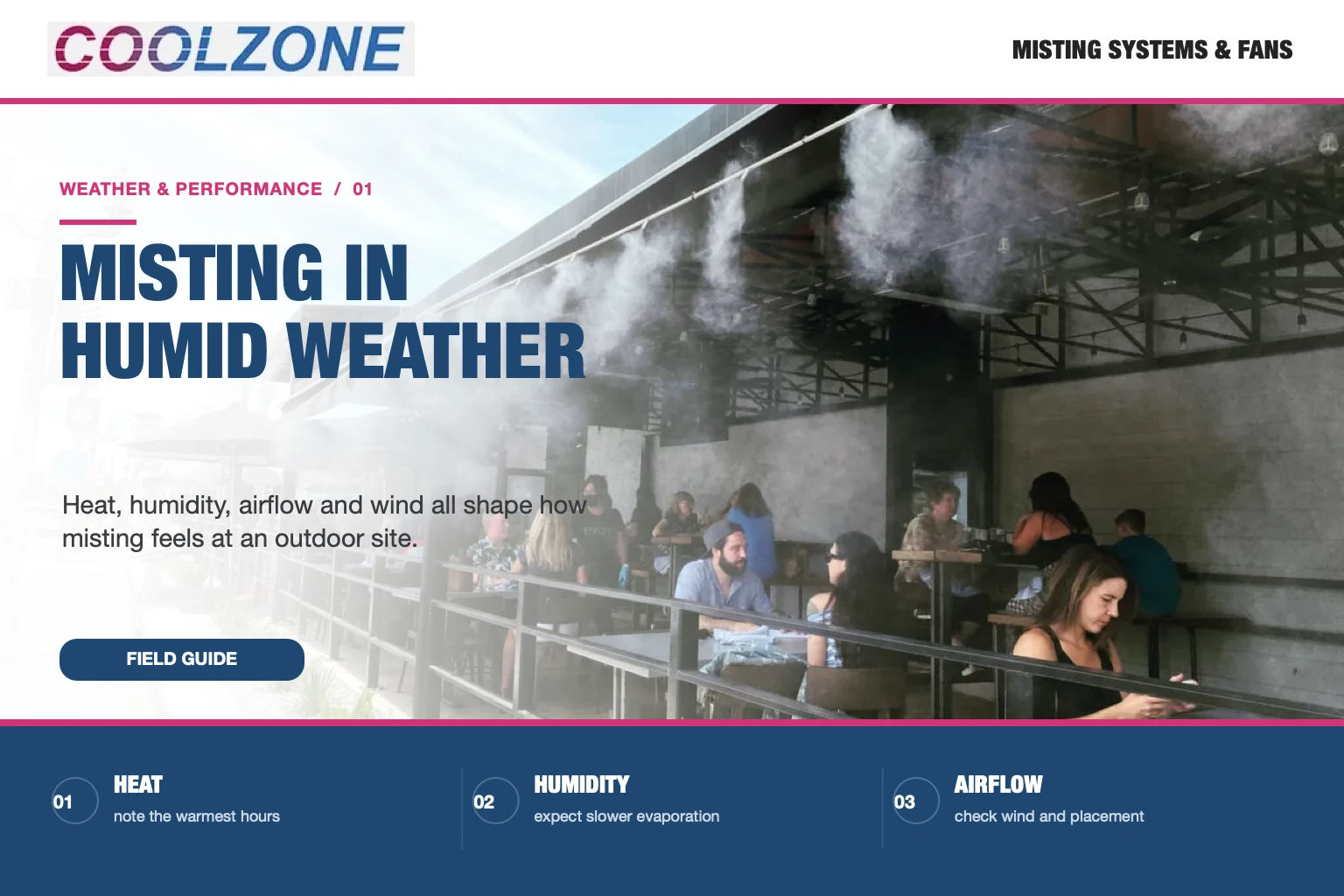
Quick answer: Yes, a misting fan can provide useful outdoor cooling in humid weather, but its effect is smaller and more variable than in hot, dry air. Heat, relative humidity, wind, droplet size, and airflow all matter; no system can promise the same temperature change at every site.
In This Article
- Why humidity changes misting performance
- What to look for in a humid climate
- Questions to ask before you buy or rent
- How to evaluate a humid site before choosing equipment
- Frequently asked questions
- Test the setup where and when people use it
Why humidity changes misting performance
Misting cools as water droplets evaporate and absorb heat from the surrounding air. When the air is already humid, evaporation slows, so a greater share of the water can remain as moisture near people or surfaces. Moving air, sun exposure, temperature, and the system’s droplet size also affect what people feel.
Research in Singapore measured a cooling and thermal-comfort effect from misting fans in a hot, humid setting, while also recording higher relative humidity. A separate 2025 outdoor experiment tested a misting fan around workers wearing protective clothing and found potential for cooling, while noting that results depend on the outdoor conditions and require further study. Those studies explain why the answer is “it depends,” rather than a guaranteed number of degrees.
What to look for in a humid climate
Start with the space and the result you need. A portable fan can direct airflow to a specific seating or work area. An overhead or fixed system can serve a defined patio or outdoor zone. Higher-pressure systems create finer spray than hose-pressure kits, but humidity and wind still affect evaporation.
| Site condition | What to plan for |
|---|---|
| Hot, humid air | Favor airflow and a system designed for fine mist; check for unwanted wetness during a site test. |
| Breezy or exposed location | Account for wind direction and place cooling where the mist can reach the occupied zone. |
| Covered patio | Review ventilation and how moisture will move through the space. |
| Surfaces that must stay dry | Test the equipment with the actual layout and furniture before an event or installation. |
A high-pressure system is not a substitute for a site assessment. If moisture near food, electronics, floors, or customer seating would be a problem, tell the installer before selecting equipment.
Planning checklist
Before buying or renting, write down the outdoor temperature and humidity range, the dimensions of the occupied area, the expected wind exposure, water and power availability, and any surfaces that should stay dry. Ask the supplier what pressure class the equipment uses, what setup is recommended for humid conditions, and whether a demonstration or site-specific quote is available.
Cool Zone offers misting fans, commercial misting systems, and misting rentals for different layouts.
How to evaluate a humid site before choosing equipment
Before choosing equipment, compare the conditions at the occupied level, not just the weather app reading. Note when the area is hottest, how much direct sun reaches it, whether wind is steady or blocked, and where people stand or sit. Humidity affects evaporation, while placement and airflow determine whether the system can serve the intended zone. A site test is the best way to check the actual spray pattern and nearby surfaces.
Use a short brief to compare recommendations:
- Mark the seating or work area, surrounding walls, shade, and walking paths.
- Note typical temperature and humidity ranges, plus the times the area is in use.
- Identify water and power access and surfaces that should remain dry.
- Ask how the proposed fan or line will be adjusted if wind or occupancy changes.
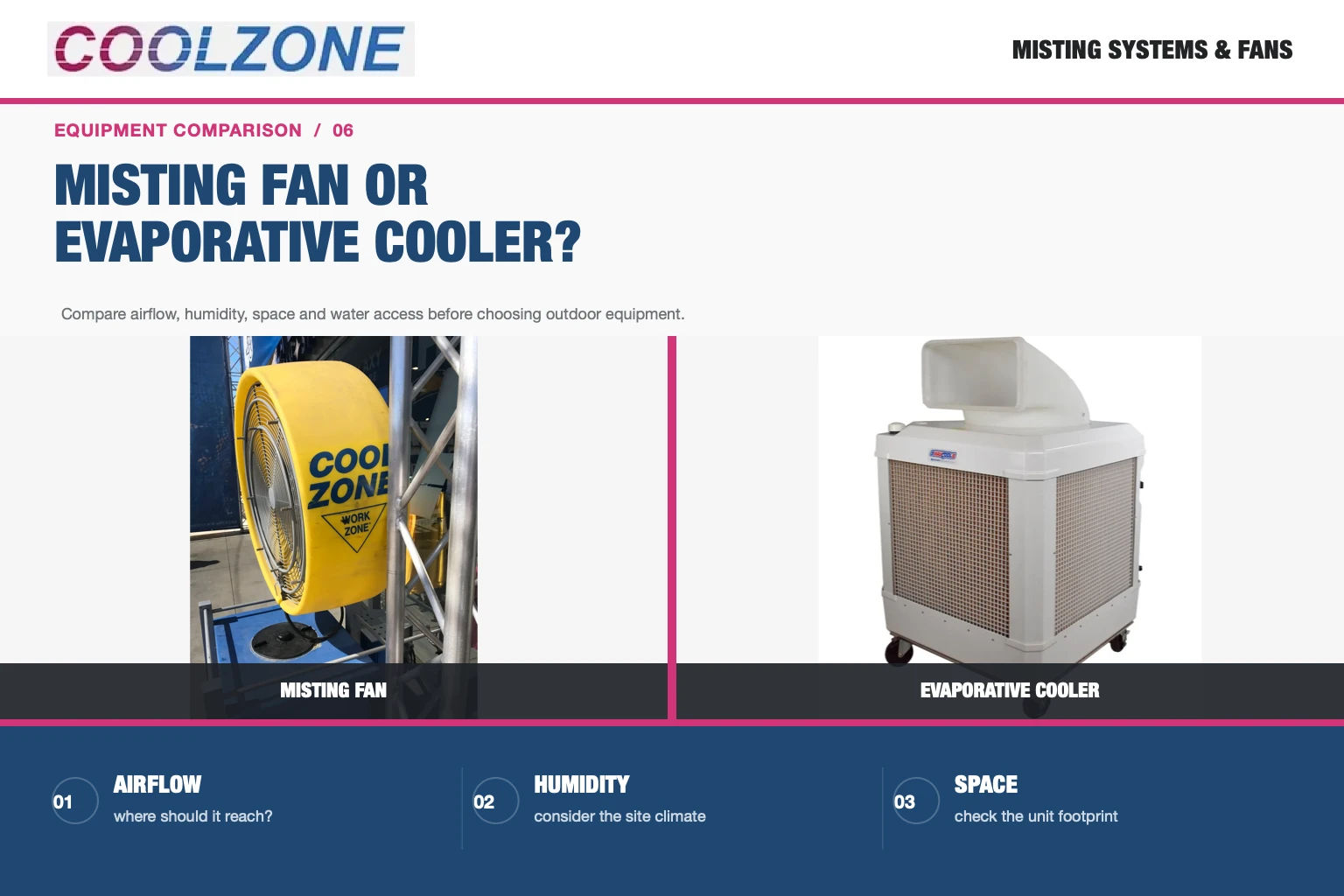
For a different equipment comparison, see misting fans versus evaporative coolers. The best choice follows the site’s conditions and operating needs; a pressure rating alone cannot predict comfort.
Test the setup where and when people use it
A weather-station reading is useful context, but it does not show how a specific patio or work area feels at the time it is occupied. Check the conditions at the intended seating or work height and note sun, shade, wind, nearby walls, and the direction in which air moves. These factors affect where mist travels and how quickly droplets evaporate, so a placement that works in one part of a site may not suit another.
If possible, evaluate the equipment at the planned location during the warmest typical operating period. Observe the spray path, airflow, nearby surfaces, and whether moisture collects where it is not wanted. Record the selected model and settings so that a supplier can interpret the result; a brief informal test is not a guarantee of performance under different weather conditions.
Cool Zone’s misting fan range and rental options are starting points for comparing equipment. If a different kind of airflow may suit the space, read the related guide to misting fans and evaporative coolers and verify the current model guidance with Cool Zone.
Frequently Asked Questions
Will a misting fan work when humidity is high?
It can still provide airflow and evaporative cooling outdoors, but the cooling effect may be smaller and more moisture may remain near the system. Site conditions and equipment design matter.
Does high pressure guarantee a dry patio?
No. Higher pressure can create finer droplets that evaporate more readily, but wind, humidity, nozzle condition, and placement still affect wetness.
Should I use a misting fan or a fixed mist line?
A fan is portable and directs airflow to a particular zone. A fixed line may suit a patio or perimeter with a permanent water supply. The right choice depends on the site layout.
Can I use misting indoors?
Misting adds moisture to the air. For enclosed spaces, review ventilation, surfaces, equipment, and the system design with a qualified supplier before installation.
Does fan placement matter as much as humidity?
Yes. Humidity affects evaporation, while placement, airflow, sun and wind affect where the cooling reaches. Evaluate them together at the actual site rather than relying on a single weather reading.
Related resources
- High-pressure misting fans
- Misting system applications
- Contact Cool Zone for a site-specific recommendation
About Cool Zone LLC
Cool Zone has supported residential, commercial, sports, industrial and agricultural misting applications since 1993. Explore Cool Zone misting systems or contact the team.