Misting Fans, Tents, or Inflatables? How to Choose Event Cooling
Quick answer: Choose event cooling by the shape of the occupied area, how people move through it, and what utilities are available. Portable misting fans suit localized cooling; a misting tent or inflatable creates a defined walk-through or gathering zone; a trailer can serve a larger area where water and power are limited.
In This Article
- Compare event cooling options
- Match equipment to the event layout
- Plan utilities and setup
- Match equipment to event flow and guest use
- Frequently asked questions
- Build a setup timeline around the event schedule
Compare event cooling options
| Option | Works well when | Plan for |
|---|---|---|
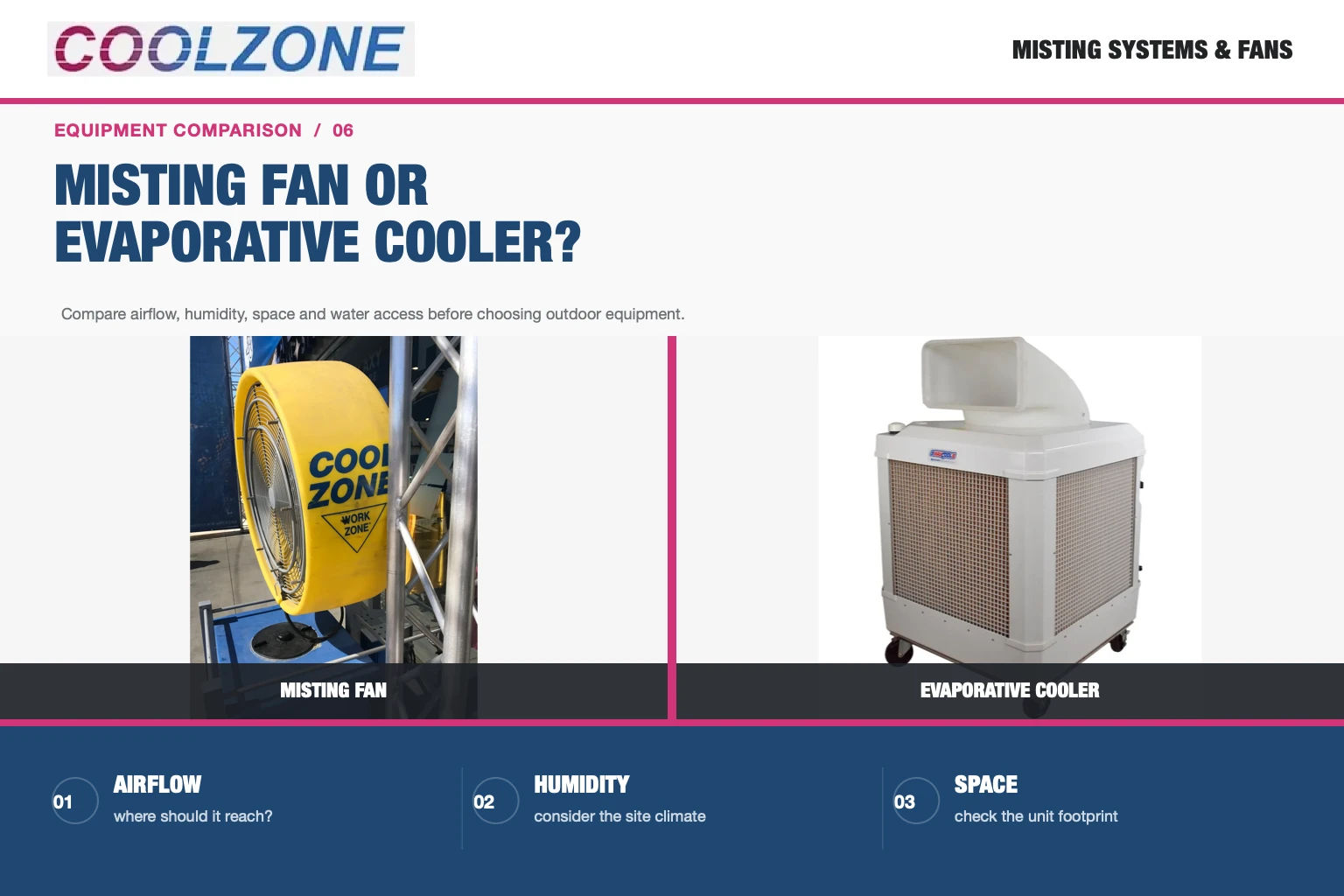
| Portable misting fan | Guests or staff need a nearby cool-down point | Fan placement, power, water, movement paths, and the area each unit can serve |
| Misting tent | You want a shaded, defined place for people to pause | Tent footprint, entry and exit, queueing, anchoring, water and power |
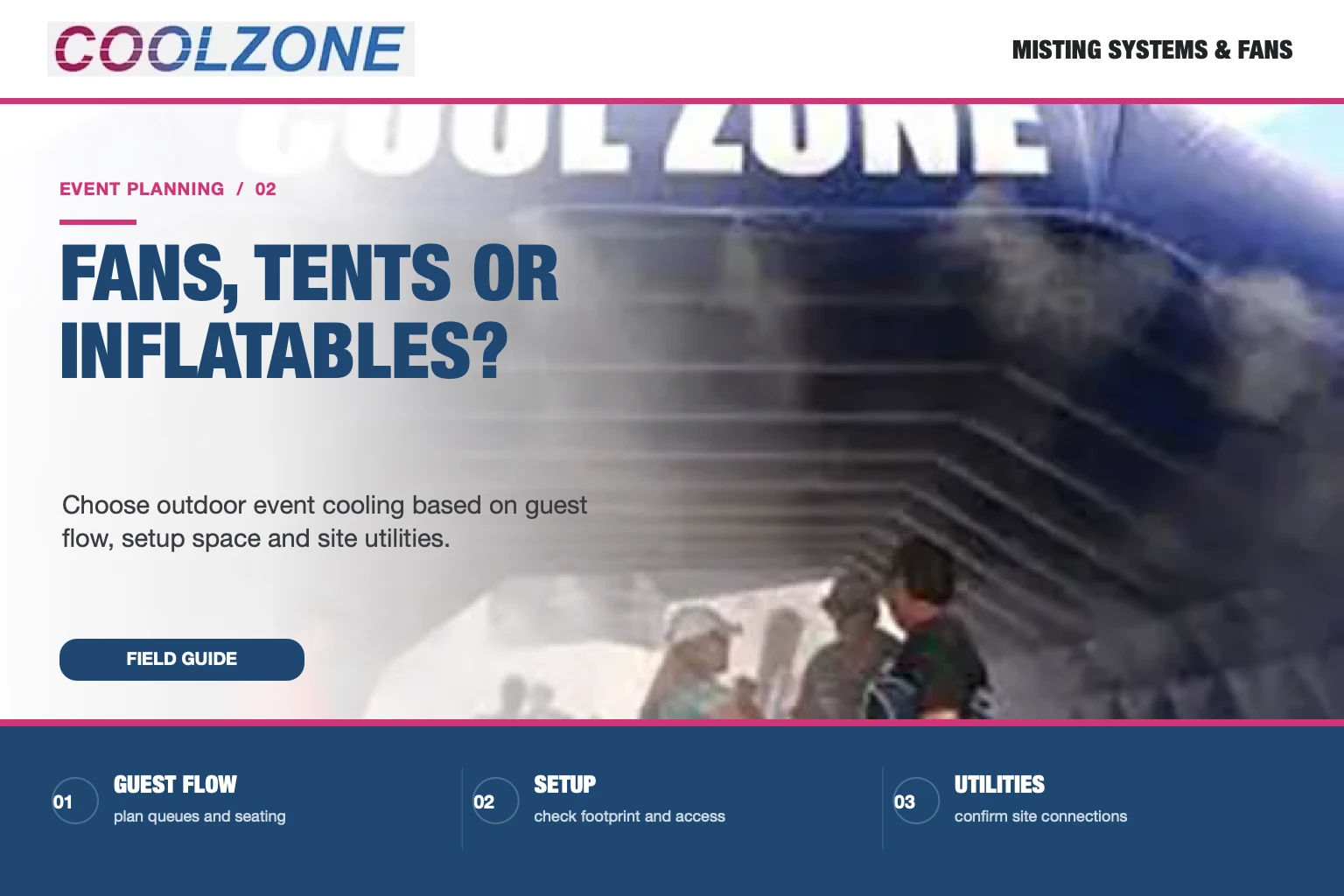
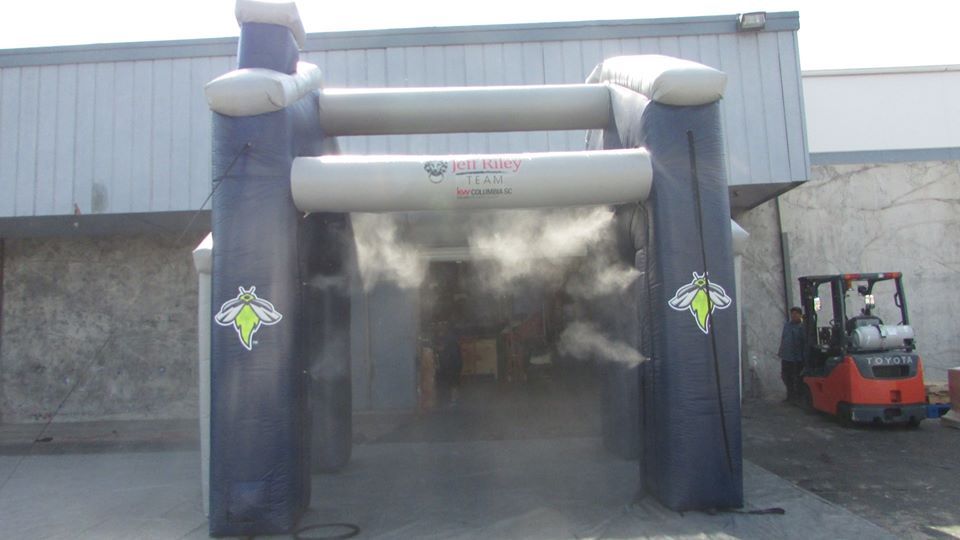
| Inflatable misting arch or station | People will pass through a visible cooling point | Placement at a transition or queue, safe clearances, anchoring, water and power |
| Misting trailer | The site needs mobile cooling over a larger or changing area | Trailer access, turning space, tank capacity, generator and operator access |
These options serve different layouts. A tent creates a destination. A fan can be moved between activity zones. An inflatable can make a cooling point easy to spot. A trailer is useful when the venue needs equipment that can move with the event.
Match equipment to the event layout
Mark the places where people will wait, sit, work, or recover. Then identify the busiest paths and areas where a queue could form. Place cooling equipment so that guests can reach it without blocking entrances, food service, accessible paths, or emergency routes.
For a large event, several smaller cooling zones may work better than one crowded point. For a compact gathering, a single fan or tent may be enough. The right number of units depends on the equipment, weather, venue, and expected attendance; ask the supplier to review the site plan rather than estimating from headcount alone.
Plan utilities and setup
List the available water connections, electrical outlets, vehicle access, setup window, and teardown deadline. Confirm who supplies water and power, who assembles the equipment, and who can respond if a unit needs adjustment during the event. For rentals, ask whether delivery, setup, and event support are included.
Cool Zone rents misting fans, tents, inflatables, and systems. See the misting tent and inflatable options and portable misting systems.
Match equipment to event flow and guest use
A useful event plan follows how people move. A cooling point beside a queue has different access and clearance needs from equipment serving seated guests or an activity zone. Map entrances, food service, accessible routes, stage or field boundaries, and the places where people are likely to pause. Then choose a setup that can be reached without creating a bottleneck.
Before booking, confirm these details with the venue and supplier:
- The delivery route, setup area, and time available for a test run.
- Whether the equipment needs a water line, electrical connection, tank, or generator.
- Who will operate and monitor it during the event and who to call for service.
- What the plan is if the event schedule, weather, or guest flow changes.
If the event repeats, compare equipment rental with ownership using the rental-versus-buying guide. For a single event, include delivery, setup, operating support and pickup in the same quote.
Build a setup timeline around the event schedule
The equipment choice should fit the event’s run of show as well as its footprint. List when deliveries can enter the site, when setup must be complete, when guests arrive, and when the equipment can be removed. Identify who provides access, who can approve placement, who makes operating adjustments, and whom the crew should contact if the event layout changes.
Mark the guest queue, rest areas, activity zones, food service, exits, and staff paths on one site plan. Add water and electrical points, cable routes, vehicle access, and any surfaces that need to remain dry. Ask the provider to confirm what each selected unit or structure requires; a product category alone does not establish the number of units or the area that can be served.
Cool Zone’s misting rentals and misting tents and inflatables provide options to discuss. For movable equipment, compare the portable misting system. If the decision involves repeated events, use the companion guide to renting versus buying misting fans to organize the operational questions.
Frequently Asked Questions
Which cooling option is best for an outdoor festival?
It depends on the venue map. Use fans near activity or seating zones, and consider a tent or inflatable for a dedicated cool-down point. Large venues may need multiple zones.
Do misting tents need water and electricity?
Cool Zone’s rental page says its systems need water and electricity to begin cooling, while some trailer configurations carry a tank and generator. Confirm the requirements for the specific rental.
Can a misting trailer serve a site without utility hookups?
Some trailer configurations include a water tank and generator. Confirm tank capacity, operating duration, refill access, and site access with Cool Zone before booking.
When should the equipment be delivered?
Allow time for placement, utility connection, a test run, and adjustments before guests arrive. Coordinate the delivery window with the venue and event schedule.
How many cooling points should an event have?
There is no fixed count that fits every event. The venue layout, occupied zones, equipment, weather and utilities all matter. Share a map and expected schedule with the supplier for a site-specific plan.
Related resources
- Misting rentals
- Misting inflatables and tents
- Misting fan rentals
- Contact Cool Zone about event cooling
Source
About Cool Zone LLC
Cool Zone has supported residential, commercial, sports, industrial and agricultural misting applications since 1993. Explore Cool Zone misting systems or contact the team.