Farm and Greenhouse Misting: Plan Cooling, Airflow, and Humidity
Quick answer: Farm and greenhouse misting should be designed around the crop or animal area, ventilation, humidity targets, water quality, and drainage. Fine spray can add moisture to the environment; the layout and controls must be matched to the operation and reviewed by an agricultural specialist.
In This Article
- Plan around the environment
- Choose equipment and controls
- Protect operations and maintenance
- Write the agricultural design brief first
- Frequently asked questions
- Set operating targets for the specific crop or livestock area
Plan around the environment
List the areas that need cooling or humidity control, the normal temperature and humidity range, airflow, solar exposure, and how the building is ventilated. In a greenhouse, note crops, canopy height, walkways, drainage, and surfaces that should not remain wet. In livestock areas, identify animal zones, feeding and watering stations, service access, and the facility’s existing ventilation.
Misting and fogging are not interchangeable in every greenhouse. New South Wales Department of Primary Industries explains that fogging and misting produce different droplet sizes and moisture behavior, and that poorly maintained or poorly matched equipment can wet plants and floors. University of Georgia Extension likewise emphasizes ventilation as part of greenhouse cooling. These are reasons to have the system designed for the specific operation instead of copying a layout from another building.
Choose equipment and controls
| Planning question | Why it matters |
|---|---|
| Is the main goal cooling, humidification, or both? | The control strategy and system configuration depend on the purpose. |
| How will air move through the space? | Airflow influences where moisture travels and how evenly it disperses. |
| What water is available? | Filtration and water quality affect nozzle performance and maintenance. |
| Where will runoff go? | Drainage helps keep work paths and floors safe. |
| Who will operate the system? | Staff need clear instructions for start-up, shut-down, and maintenance. |
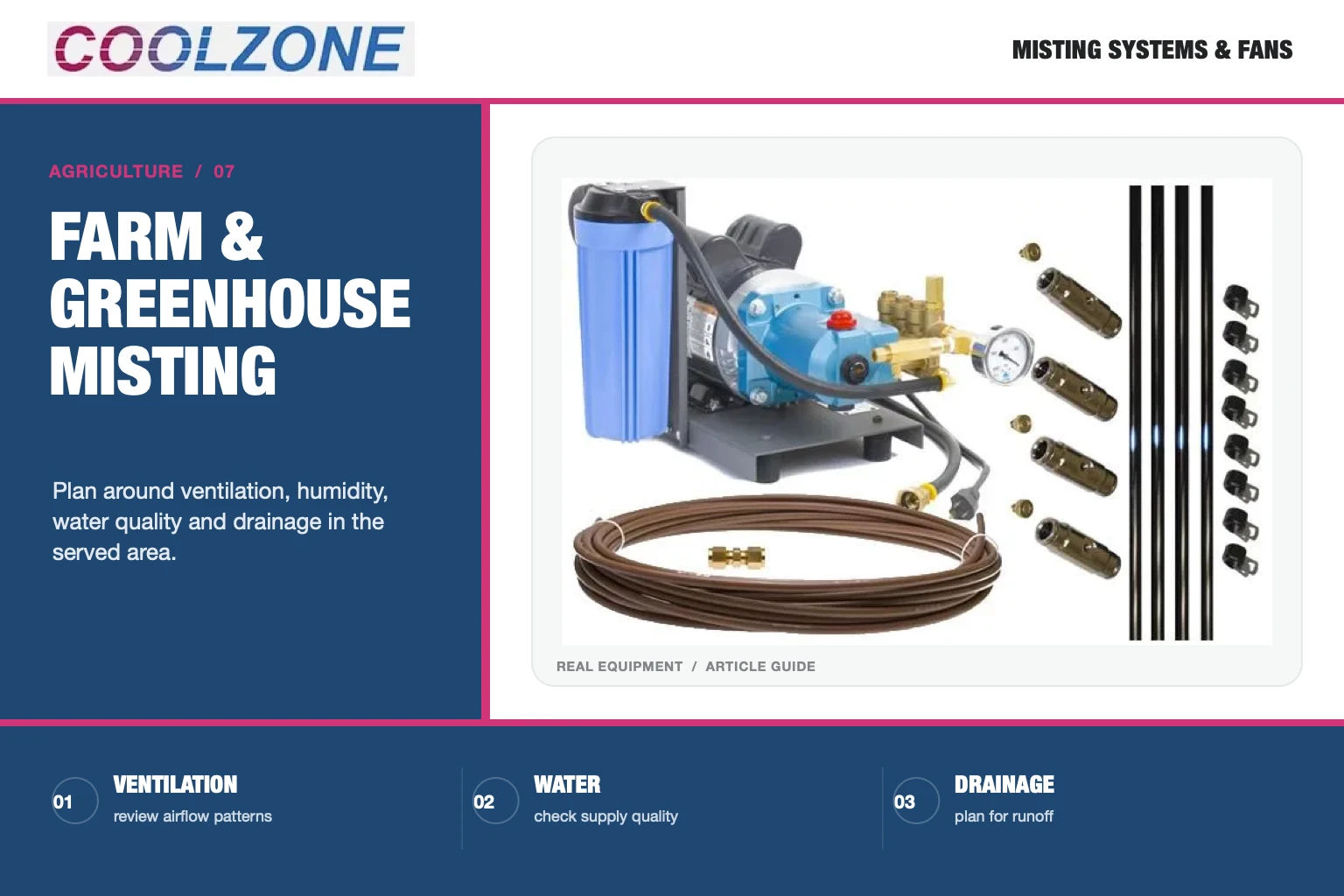
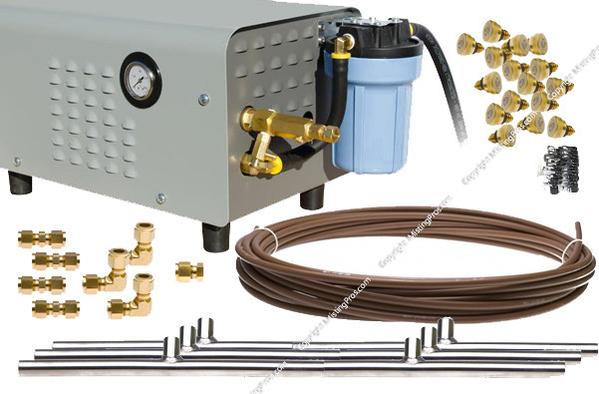
Cool Zone offers farm misting systems, industrial misting, and humidification systems. For crop or animal setpoints, consult an agronomist, veterinarian, or facility specialist.
Protect operations and maintenance
Ask the supplier to specify the system’s pressure class, nozzle type, filtration, control zones, water and power requirements, cleaning schedule, and service access. Keep a record of the spray pattern and operating settings. If leaves, equipment, bedding, feed, or walking surfaces must remain dry, identify that constraint before installation and test the system before regular use.
Write the agricultural design brief first
A farm or greenhouse brief should state the operation’s goal before it names equipment. Cooling, humidity management and animal comfort can call for different controls and operating schedules. Record the areas involved, when they are occupied, how air moves through them, and which crops, equipment, feed, bedding or paths have a low tolerance for moisture.
Include these details for the system designer:
- Current ventilation method and how it changes across the operating day.
- Water source and any known filtration or water-quality requirements.
- Drainage, floor conditions, access for cleaning, and seasonal shutdown needs.
- The person responsible for checking settings and maintaining the system.
Ask an agronomist, veterinarian or facility specialist to confirm environmental targets before equipment is selected. The same evaporation principles described in misting fans and humid weather apply, but crop and animal requirements must guide the final design.
Set operating targets for the specific crop or livestock area
A greenhouse, propagation area, livestock space, and produce-handling area can have different environmental goals. Define the intended use before choosing controls: is the main objective to manage heat near people or animals, influence humidity around a crop, or serve another process? Write down the conditions that must be maintained and the times of day when they matter, using targets provided by the crop or animal specialist for that operation.
Also describe the ventilation pattern, the water source, the areas that should remain dry, and how operators will observe the space after the system starts. Ask the supplier how the proposed equipment, control method, and water treatment relate to those site requirements. Avoid treating a general misting layout as a crop-specific prescription; species, stage of growth, building design, and local climate can change the appropriate approach.
Cool Zone’s farm misting and humidification pages show relevant product applications. The farm and greenhouse misting article and humid-weather guide can help structure the questions for a site review. Include crop or livestock requirements from your agricultural advisor when you request a recommendation.
Frequently Asked Questions
Is misting the same as greenhouse fogging?
No. Systems can use different pressures and droplet sizes, which changes how moisture moves and whether surfaces become wet. Ask the supplier to explain the equipment proposed for your greenhouse.
Can a misting system raise greenhouse humidity?
Yes. Adding water mist or fog can increase moisture in the air. Design the system with ventilation and the operation’s humidity requirements in mind.
What water quality is suitable?
The required filtration depends on the nozzles and pump. Ask the system supplier to specify filtration and maintenance for the water source at your site.
Can I use one design for crops and livestock?
Do not assume so. The environmental targets, moisture tolerance, layout, and operating schedules differ by application. Have the system reviewed for the specific facility.
Should mist be allowed to settle on leaves or floors?
That depends on the crop, facility, drainage and operating requirements. Identify moisture-sensitive areas in the design brief and have an agricultural or facility specialist confirm acceptable conditions before installation.
Related resources
About Cool Zone LLC
Cool Zone has supported residential, commercial, sports, industrial and agricultural misting applications since 1993. Explore Cool Zone misting systems or contact the team.