Misting Fans vs. Evaporative Coolers: Which Outdoor Cooling Option Fits?
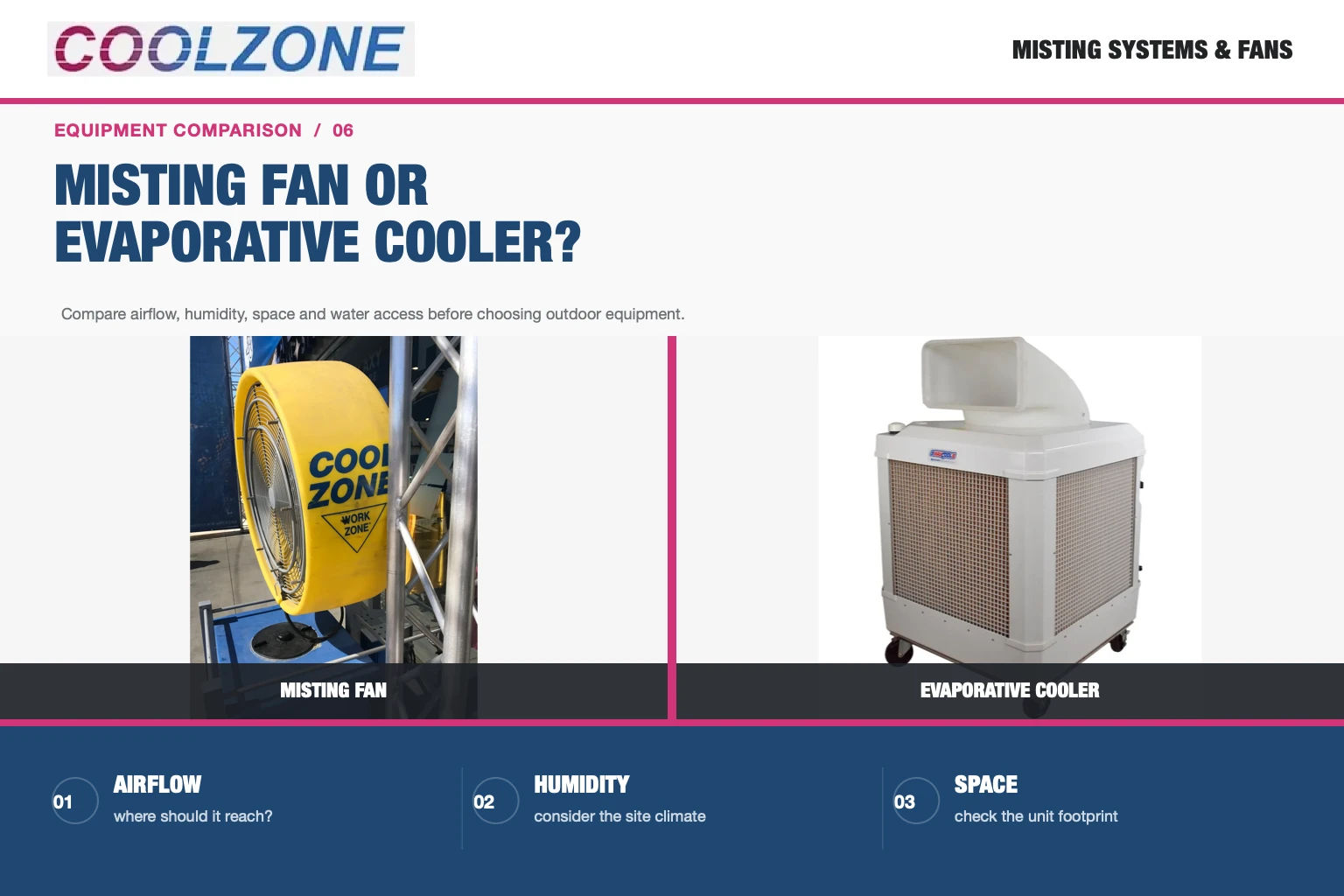
Quick answer: A misting fan combines airflow with water mist for a localized outdoor cooling zone. An evaporative cooler draws air through wet pads and directs cooled air from the unit. Compare the space, ventilation, humidity, portability, utilities, and the area you need to serve.
In This Article
- How the options differ
- Choose by location and climate
- What to include in a product enquiry
- Use a simple decision sequence
- Frequently asked questions
- Compare model instructions with the space
How the options differ
| Factor | Misting fan | Evaporative cooler |
|---|---|---|
| How it works | A fan moves air while a nozzle system releases water mist | A fan draws air through water-saturated pads and circulates the cooled air |
| Cooling zone | Localized area near the fan and airflow | Directed air stream from the cooler |
| Water and power | Depends on fan and pump model | Depends on model and water reservoir or supply |
| Layout | Portable, wall-mounted, or integrated into a system | Portable unit placed near the area needing airflow |
| Climate | Evaporation and comfort depend on local humidity and wind | Direct evaporative cooling generally performs best in hot, dry air; check the selected unit’s operating guidance |
The names sound similar, but the equipment serves the space differently. A misting fan is useful when you want airflow with mist at a defined location. An evaporative cooler is a fit when a directed stream of cooled air is more useful than a misting zone.
Choose by location and climate
For an open patio, event, or work zone, check wind exposure, water and power access, and the surfaces near the cooling equipment. For a semi-enclosed area, consider how air will enter and leave. Evaporative cooling adds moisture to the air, so ventilation and local climate matter. DOE’s building guidance notes that evaporative cooling is most effective in hot, dry climates; Cool Zone lists specific PROKOOL and WAYCOOL units for a range of environments, so verify the current model’s operating guidance before choosing.
What to include in a product enquiry
Share the area dimensions, indoor or outdoor setting, typical temperature and humidity, ventilation, distance to water and power, and whether the equipment needs to move. Ask what area the model is intended to serve, what maintenance it requires, and what operating conditions affect performance.
Browse Cool Zone’s misting fans and evaporative cooling units, or contact the team with your layout.
Use a simple decision sequence
Start with the space and the kind of airflow you need. A misting fan combines a fan with a misting system at a defined location. An evaporative cooler directs air through its cooling media and toward an occupied area. The equipment labels alone do not tell you how well either will serve a particular room or patio.
Use this sequence to narrow the choice: 1. Decide whether the area is open, semi-enclosed, or indoors, and describe how air enters and leaves. 2. Identify the people or work area the unit should serve and whether the equipment must move. 3. Check local heat and humidity, water and power access, and surfaces that should remain dry. 4. Compare the selected model’s instructions and request a site-specific recommendation.
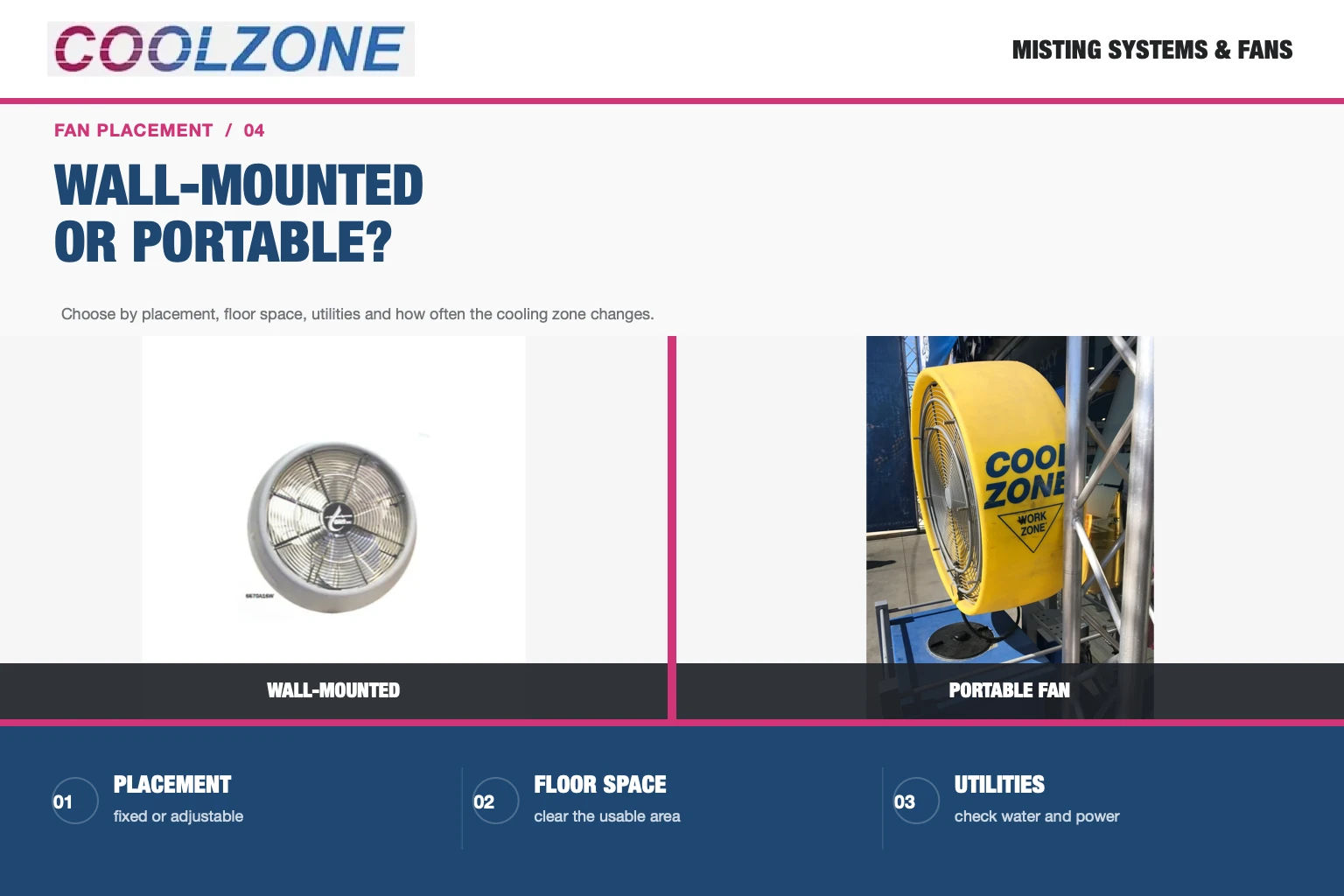
Because evaporation changes with humidity, read what to expect from misting fans in humid weather before deciding. For fixed versus movable fan placement, see wall-mounted and portable options.
Compare model instructions with the space
Once you know which kind of airflow fits, check the instructions for the exact model. Record whether the location is fully open or partly enclosed, how air can enter and leave, the water and electrical requirements, and how the unit should be positioned relative to people and nearby surfaces. Humidity and ventilation influence evaporative performance, but the specific operating guidance for a model should take precedence over a general comparison.
A misting fan places water mist into moving air at a particular zone. An evaporative cooler draws air through its wet media and directs that air outward. Neither description guarantees a particular temperature change or whole-room coverage. Ask the supplier to confirm the intended application, maintenance routine, refill or water-supply arrangement, and any limits on use in a semi-enclosed space.
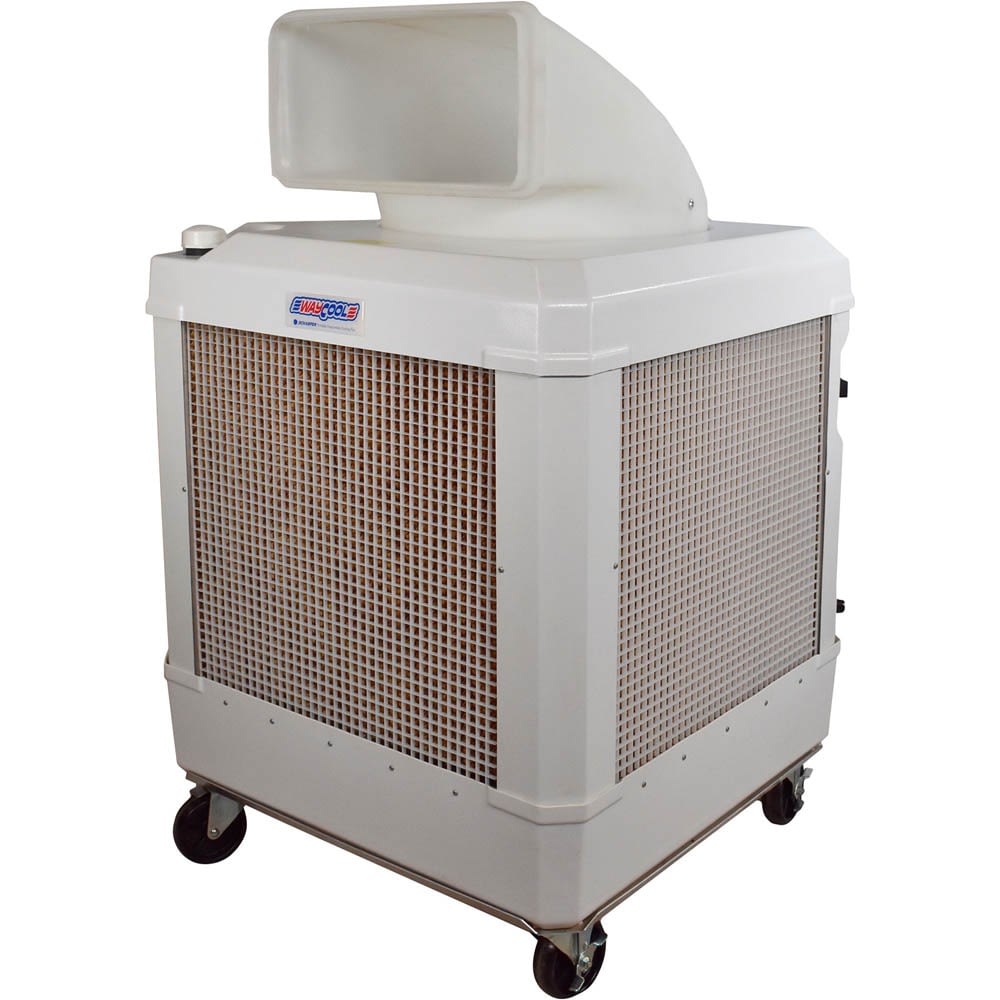
Cool Zone’s evaporative cooling collection includes models such as the WayCool 1HP evaporative cooling unit; review the current product details rather than assuming every cooler shares the same requirements. Compare the misting fan range and read what to expect in humid weather before deciding.
Frequently Asked Questions
Is a misting fan the same as an evaporative cooler?
No. A misting fan releases mist into moving air. An evaporative cooler pulls air through wet pads and directs cooled air from the unit.
Which option works better in humid weather?
Performance depends on the model and conditions. Direct evaporative cooling generally works best in hot, dry air; misting also depends on how quickly droplets evaporate. Ask Cool Zone to review the expected temperature, humidity, and ventilation.
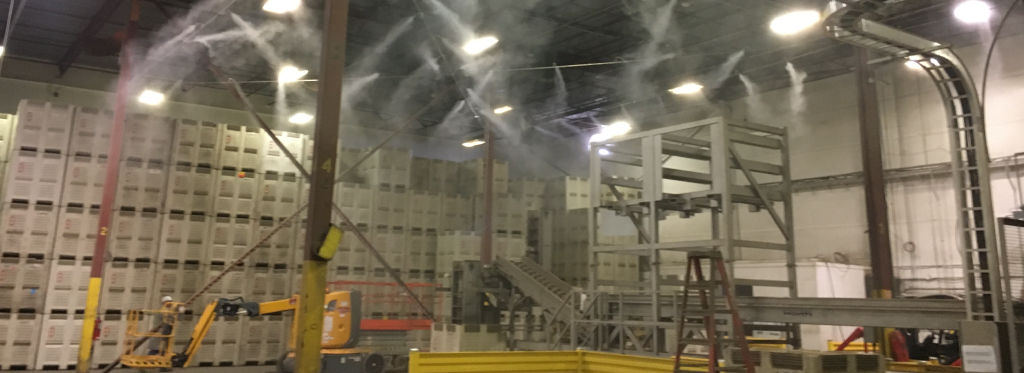
Can either option cool a whole warehouse?
Coverage depends on the equipment and the building layout. Share the room dimensions, airflow, heat sources, and operating requirements with a supplier before selecting units.
Do both options need a water connection?
Both use water, but the supply and operating requirements vary by model. Confirm reservoir, refill, filtration, and electrical details on the specific product.
Can an evaporative cooler serve a partially enclosed space?
It depends on ventilation, the selected unit and the operating conditions. Review the model guidance and explain the space’s openings, airflow and humidity to the supplier before choosing.
Related resources
About Cool Zone LLC
Cool Zone has supported residential, commercial, sports, industrial and agricultural misting applications since 1993. Explore Cool Zone misting systems or contact the team.