How to Plan a Restaurant Patio Misting System
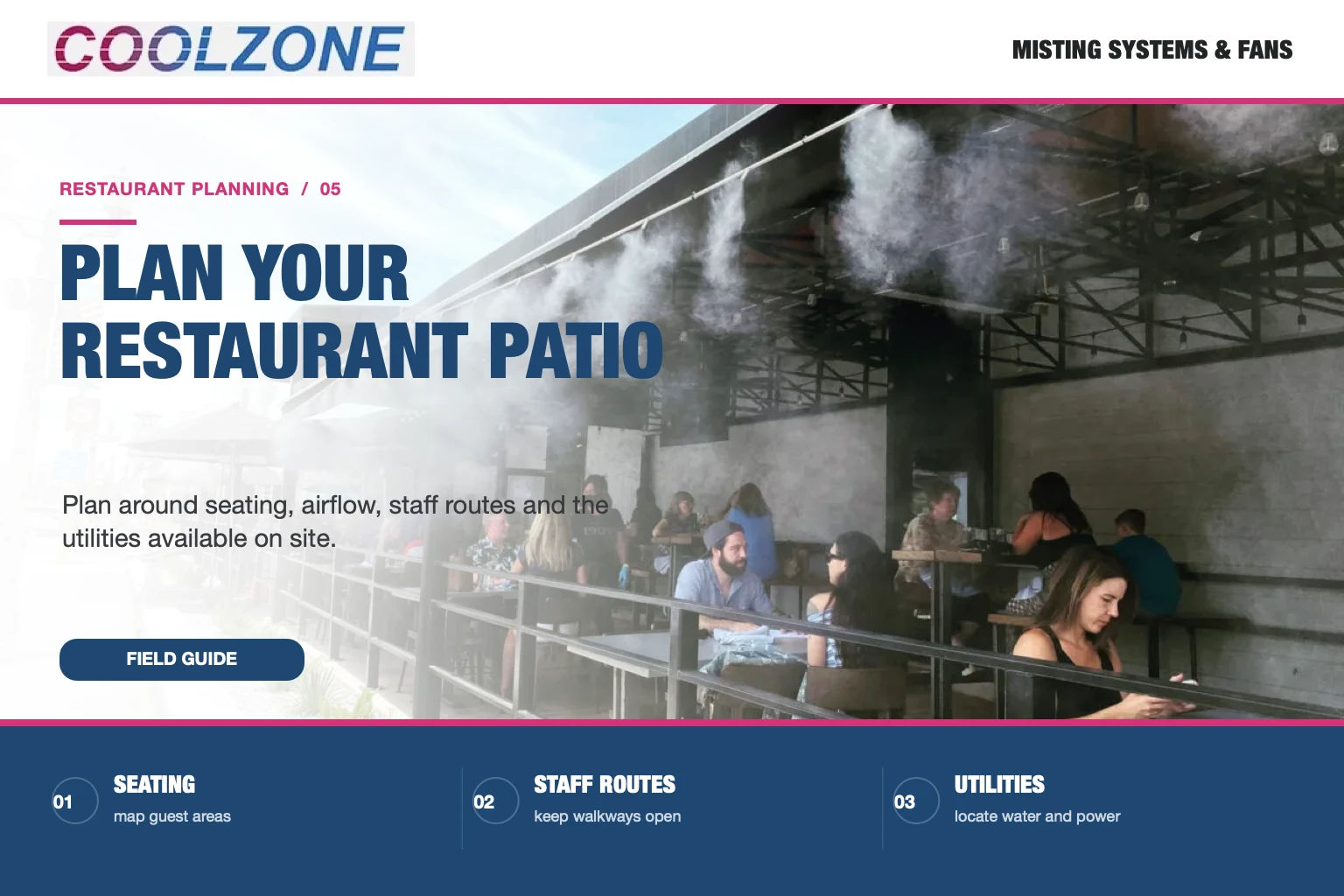
Quick answer: A restaurant patio misting system should follow the occupied seating area, preserve clear service and accessible paths, and account for airflow, shade, water, power, and surfaces that must stay dry. Map the patio before choosing fans, overhead lines, or a combination.
In This Article
- Start with a patio map
- Choose the system layout
- Check utilities and operations
- Design zones around service and changing patio conditions
- Frequently asked questions
- Design around service flow and changing patio use
Start with a patio map
Draw the seating, shade structures, service stations, doors, walkways, and neighboring areas. Mark where guests sit longest and where staff need clear movement. Note the patio’s sun exposure, prevailing wind, water source, electrical access, and any surfaces or equipment that should not get wet.
This simple plan gives an installer a practical starting point. It also helps identify whether cooling should be fixed over a group of tables or provided by portable fans in specific areas.
Choose the system layout
| Layout | Consider it when | Confirm before installation |
|---|---|---|
| Overhead misting line | Seating is stable and a perimeter or overhead structure is available | Mounting, nozzle position, drainage, water treatment, and maintenance access |
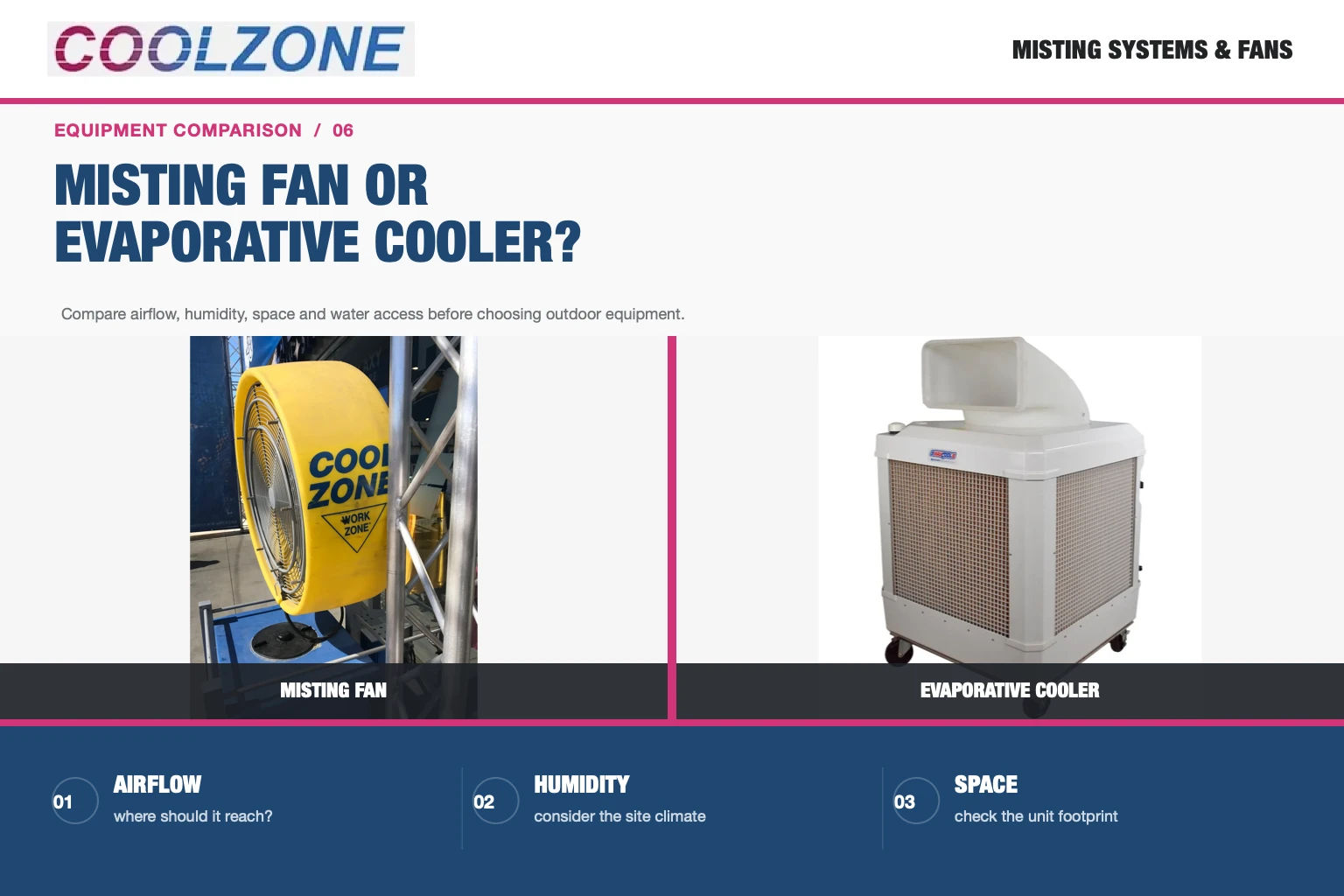
| Misting fan | The patio has defined seating or work zones that benefit from directed airflow | Fan position, power, water connection, clearance, and spray direction |
| Combination | The patio has multiple zones or changing conditions | Independent controls, operating plan, and who will service the equipment |
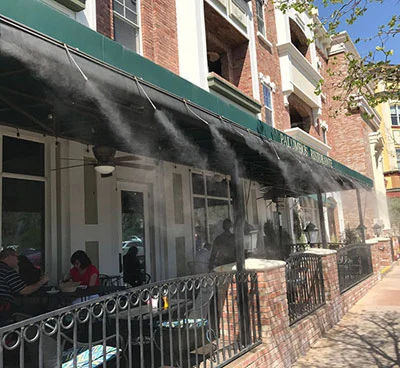
The best layout is site-specific. Avoid aiming mist directly at table settings, food service, entrances, or a neighbor’s property. Ask the installer how wind and humidity may change the mist’s reach and evaporation.
Check utilities and operations
Before requesting a quote, collect the patio dimensions, seating plan, operating hours, water and power locations, shade details, and preferred control zones. Decide who will turn the system on, check it during service, and handle routine maintenance. If the patio changes seasonally, mention that as well.
Cool Zone has designed and installed restaurant misting systems and commercial misting systems. Share a patio plan through the contact page to discuss a site-specific setup.
Design zones around service and changing patio conditions
A patio has to work during service, not just look complete on a plan. Review the seating layout at different times of day, when sun, shade and wind can shift. Keep mist away from food preparation, table settings, entrances and surfaces where moisture could create a problem. Leave staff a clear route between tables and the service area.
If the patio has several distinct areas, label each one on the drawing and note its operating schedule. A fixed line may serve a stable perimeter; a fan may be easier to position near a specific seating or work zone. Identify who can switch the equipment on or off, what to check during a shift, and how staff will report a change in spray or an unwanted wet area.
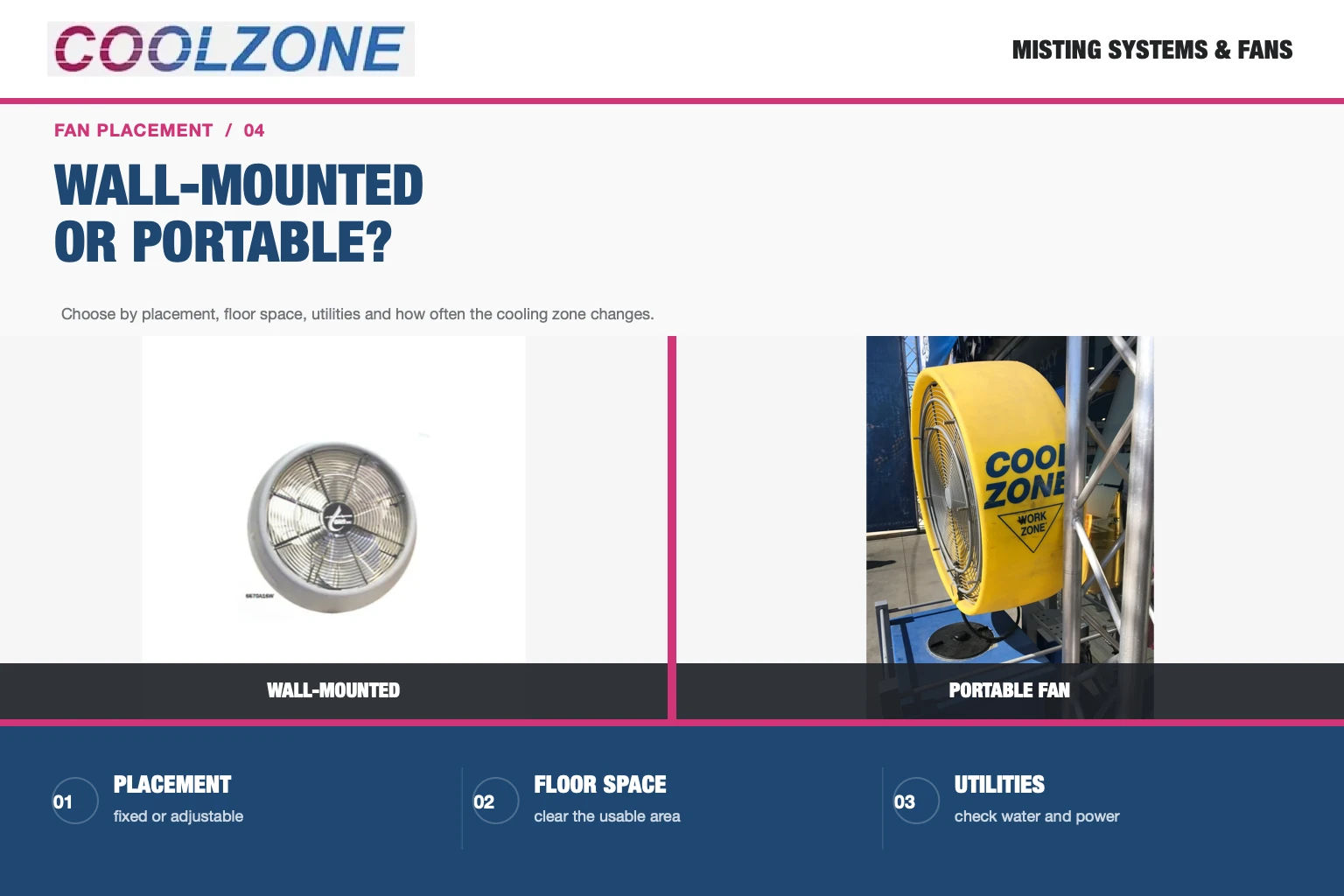
Where floor space is limited, compare wall-mounted and portable fan layouts. Include a marked patio plan, water and electrical locations, shade details and operating hours when you request a site recommendation.
Design around service flow and changing patio use
A patio misting plan should support the way guests and staff use the space at different times of day. Mark table locations, server paths, entrances, pickup areas, and any space used for queueing or deliveries. Note where the sun shifts, where wind is blocked, and which surfaces should not be wetted. These details help the installer consider placement without putting equipment or connections in the middle of normal service routes.
If the patio has distinct zones, decide whether they have different operating hours or occupancy patterns. Ask whether the selected configuration can be controlled or isolated by area, and how staff should adjust it when tables move or the patio is partly closed. Confirm where the pump and service points will sit so routine checks can be made without disrupting guests.
For a site-specific proposal, share a measured plan, photos, seating capacity as you currently use it, water and power locations, and any mounting restrictions. Cool Zone’s restaurant misting systems and patio misting systems show relevant application pages. If you are deciding between a fan and fixed coverage, compare the wall-mounted and portable fan guide before contacting the team.
Before finalizing, have a manager and a staff member who works the patio walk through the drawing. Confirm that open and closed sections can be served without directing mist into the restaurant interior or interfering with dining and service. Check how tables shift for larger parties, cleaning, deliveries, and weather changes; mark an approved alternate arrangement if needed. Ask the installer to document controls and normal start-stop responsibilities so the team can operate the system consistently. Keep the product manual and service contact details accessible to the people responsible for the equipment.
Frequently Asked Questions
Should restaurant misting be installed over every table?
Not necessarily. Plan coverage around where guests sit and how staff move. The installer can recommend whether a line, fan, or separate zones fit the patio.
Will misting make tables or floors wet?
It depends on system pressure, weather, airflow, placement, and nozzle condition. Test the system with the actual layout and surfaces before regular service.
Can a patio use both misting fans and overhead lines?
A combination may suit a multi-zone patio. The design should explain what each system serves and how the zones are controlled.
What should I include in a quote request?
Send a measured layout, seating count and arrangement, water and power access, shade or roof details, operating schedule, and any areas that need to remain dry.
Should patio zones have separate controls?
Separate controls may help when areas have different occupancy or operating schedules, but the layout and system design determine whether they are practical. Ask the installer to show how each proposed zone is controlled.
Related resources
About Cool Zone LLC
Cool Zone has supported residential, commercial, sports, industrial and agricultural misting applications since 1993. Explore Cool Zone misting systems or contact the team.